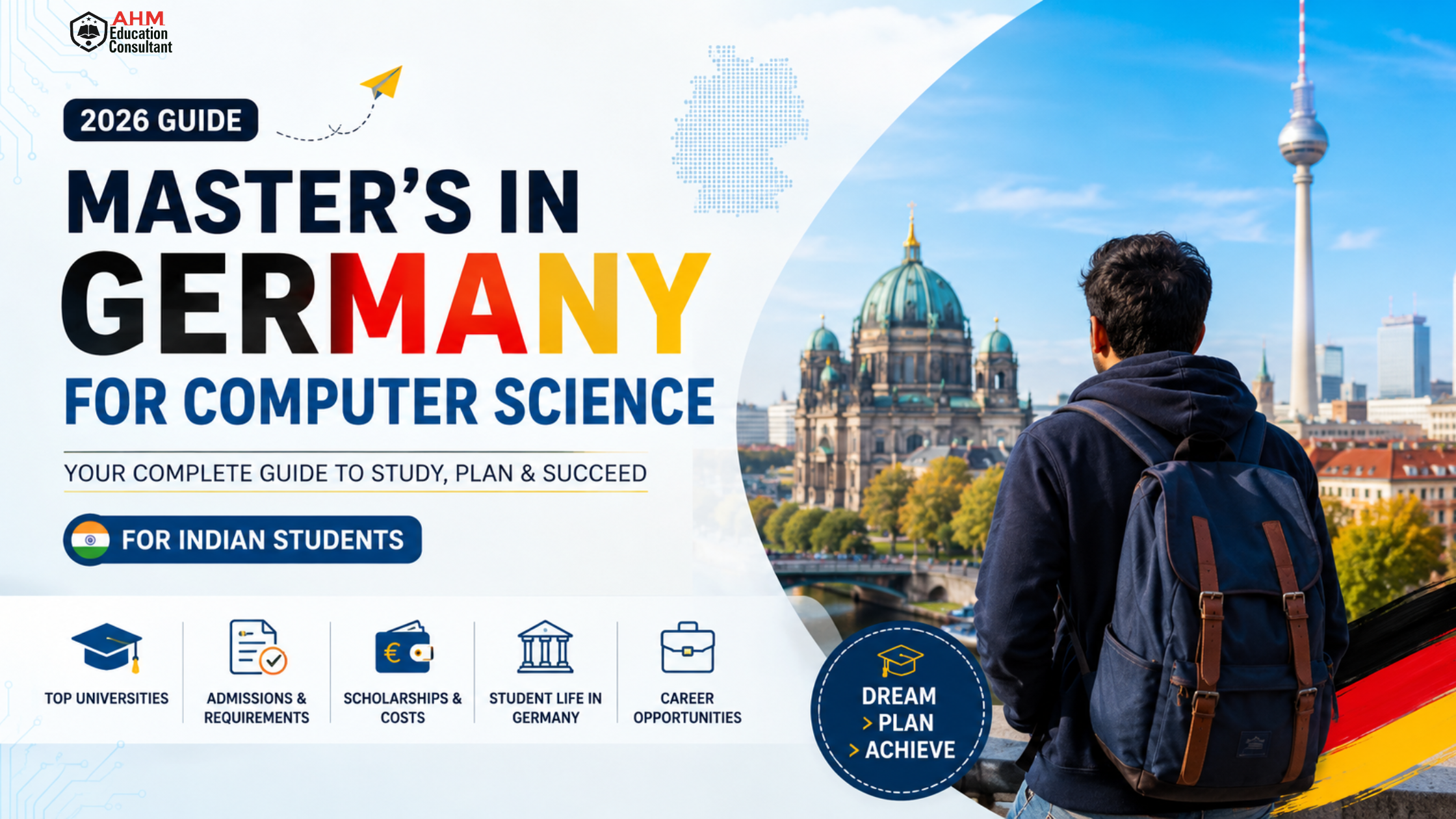
Germany Education Guide for Indian Students: Admissions, Visa & Costs
.png)
Germany is one of the best study-abroad options for Indian students because it combines strong academic quality, low tuition fees at public universities, and clear post-study career opportunities. With the right plan, you can manage admissions, visa steps, and costs without unnecessary confusion.
Why is
Germany ideal for Indian students?
Germany is a top choice for Indian students due to its affordable education,
internationally recognised degrees, and strong career opportunities after
graduation. Public universities in Germany usually charge only a small semester
fee rather than high tuition, while many master’s programs are offered in
English. The country also offers an 18-month post-study job-seeker period,
which gives graduates time to find relevant work.
Another advantage is Germany’s large Indian student
community, which makes the transition easier for new applicants. Students also
benefit from strong industry links in engineering, IT, business, and
research-oriented fields.
Admission
requirements for Indian applicants
For master’s programs, Indian students generally need a recognised bachelor’s
degree, a relevant academic background, proof of language ability, and APS
verification. English-taught programs usually ask for IELTS or TOEFL, while
German-taught programs may require TestDaF or DSH. APS has been mandatory for
Indian applicants since November 2022.
For bachelor’s programs, the route is more specific. From
Winter Semester 2026/27 onward, a minimum of 70% in Class XII is required for
the main admission pathways, and many students may still need Studienkolleg
depending on their academic background. Admission is not based on a single
national entrance exam; instead, universities check your marks, language
scores, and documents.
Application process: step-by-step
- Choose
a program and check the exact admission criteria on the university’s
website.
- Apply
directly through the university portal or through uni-assist if the
institution uses it.
- Arrange
APS certification and language tests well before deadlines.
- After
receiving an admission letter, prepare visa documents and financial proof.
Apply early. APS, language tests, and university deadlines
can take time, so start several months ahead to avoid last-minute issues.
Germany student visa: what Indian students need to know
Indian students need a German student visa or a student applicant visa,
depending on whether they already have admission. The student visa is for those
who have received admission, while the applicant visa is for those still
waiting on admission or preparing for the entrance steps.
Visa
steps overview:
- Start
the online application on the German mission’s portal.
- Book
and attend the biometric appointment (often via VFS).
- Submit
documents: passport, admission letter, APS certificate, blocked account
proof, health insurance, academic records, and visa form.
- Pay
the visa fee (around €75).
- Expect
processing to take several weeks—apply 3–4 months before travel.
Cost of studying in Germany (clear breakdown)
The biggest financial requirement is proof of funds through a blocked account,
which is currently €11,904 per year. This money is not tuition; it’s your
living budget for rent, food, transport, and daily expenses. Monthly living
costs are typically estimated at around €800–€1,000, depending on the city and
lifestyle.
Approximate costs for Indian students:
- APS
certificate: ₹18,000
- Visa
fee: €75 (about ₹6,200–₹7,100)
- Language
tests: ₹12,000–₹17,000
- Uni-assist
application: ₹3,000–₹6,500 per university
- Blocked
account deposit: about ₹10.5 lakh
- Semester
fee (public universities): €100–€350 per semestre
Scholarships
and savings
Scholarships can reduce your upfront burden if you qualify. DAAD, Erasmus+, and
university-specific scholarships are common funding options for international
students. Some students also use education loans or formal sponsorship as
financial proof.
Choosing a public university can save a lot because tuition
is usually very low compared with private institutions. Compare city living
costs, since big cities tend to be more expensive than smaller university
towns.
After
arrival: essential tasks
Once you arrive in Germany, register your address (Anmeldung), set up or
activate your bank account, arrange health insurance, and apply for a residence
permit. These steps are required to settle in properly and access your
blocked-account funds and other services.
Students can work part-time while studying, but there are
limits on hours. Working helps with experience and income, but your main goal
should be completing your degree on time.
Final
thoughts
Germany is a strong option for Indian students who want a high-quality
education with manageable costs and real career value. The keys are early
planning, verifying eligibility, and preparing financial proof before the visa
stage. With the right preparation and, if needed, help from a reliable German
education consultant, the process becomes much more manageable.
Ready to study in Germany? Take the first step today and get
expert guidance to turn your dream into reality with the right strategy and
support from Ahm Education Consultant.
FAQs
1. Is APS mandatory for Germany?
Yes, APS certification is mandatory for Indian students
applying to German universities and student visas.
2. How much bank balance is required to study in Germany?
Students currently need around €11,904 in a blocked account
to cover one year of living expenses in Germany.
3. Can Indian students work part-time in Germany?
Yes, international students in Germany can work part-time
while studying to support their living expenses and gain experience.
4. What is the average cost of living in Germany for
students?
Monthly living expenses are usually between €800 and €1,000,
depending on the city and lifestyle.
5. Can students stay in Germany after graduation?
Yes, graduates can stay in Germany for up to 18 months after
graduation to search for jobs related to their field.

Copyright | All Rights Reserved.